

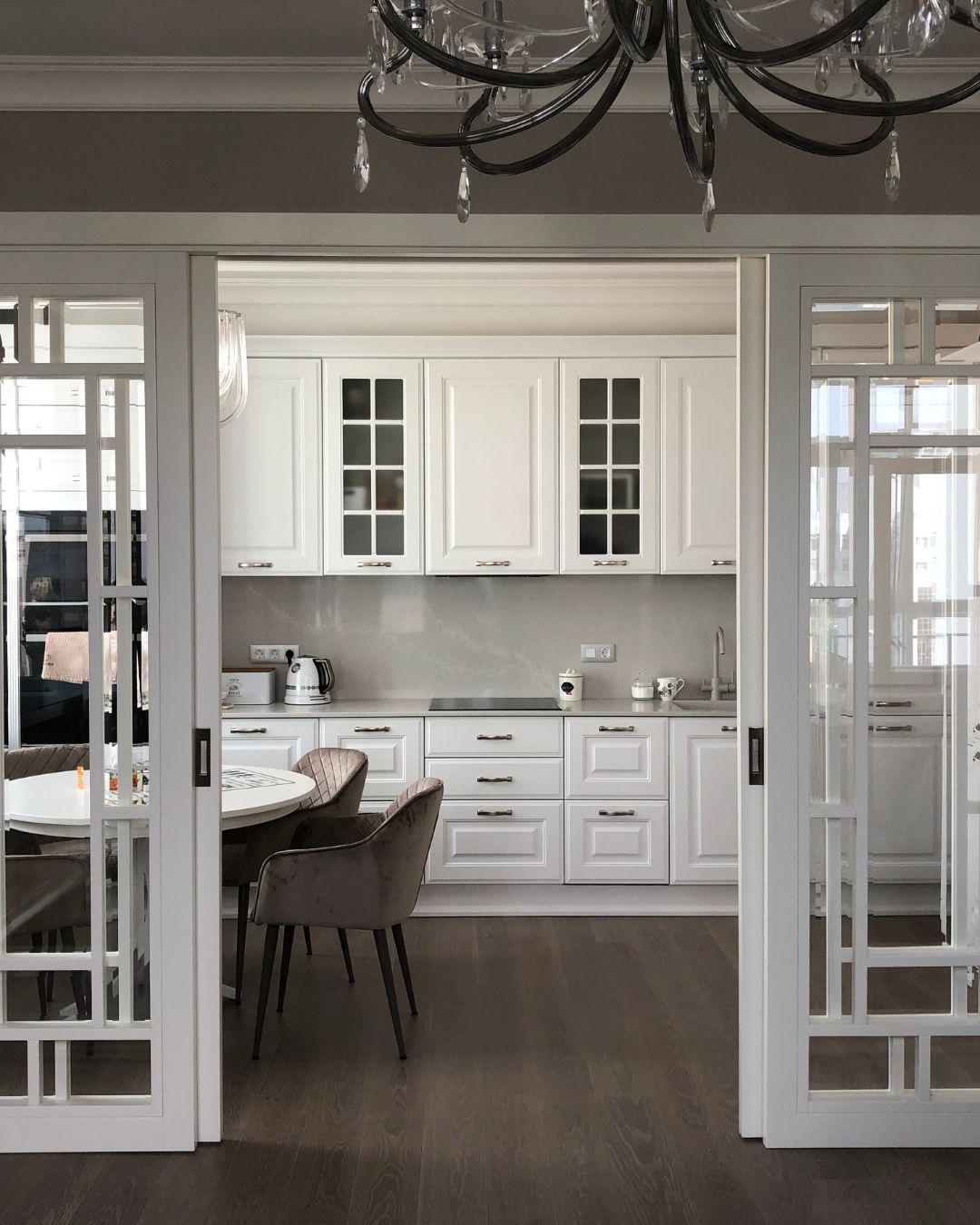
Why it is wise to order your doors and furniture from the same manufacturer
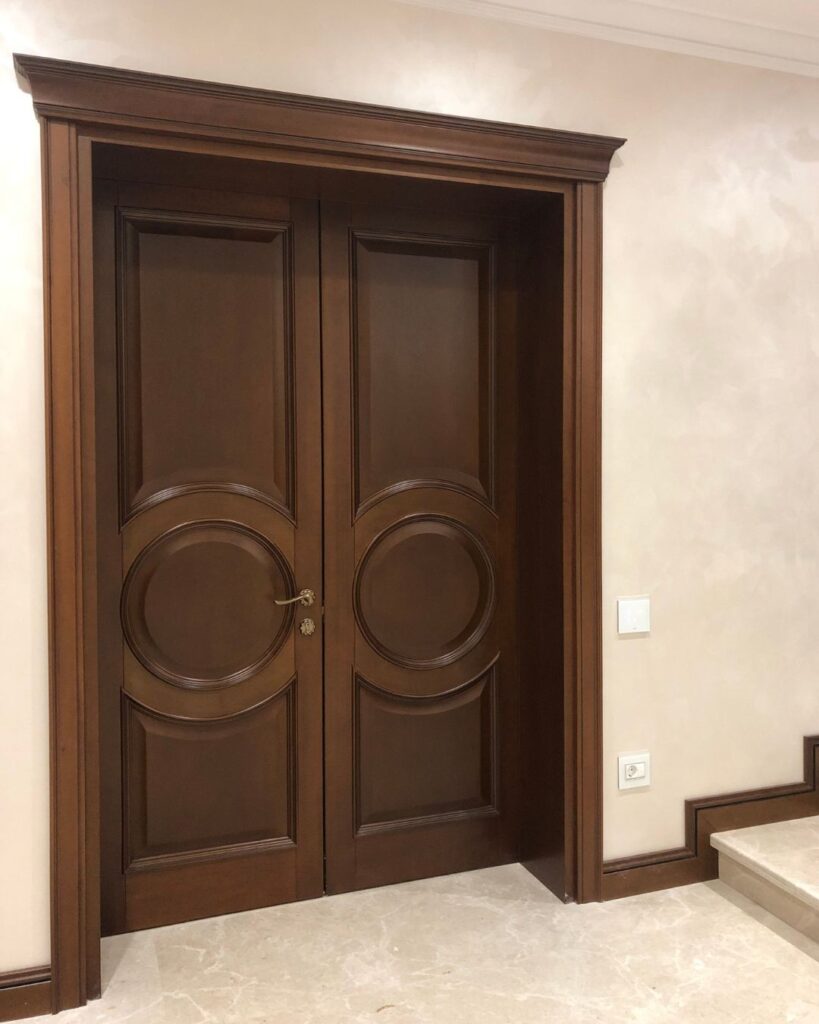
When undertaking a high-quality renovation, a lot of attention is paid to materials, finishes, and the choice of furniture. Yet one essential question is often underestimated: should the doors, kitchen, wardrobes, and furniture be made by different manufacturers, or is it better to entrust the entire project to a single company?
In most cases, the second solution proves more practical, more coherent, and offers a clearly superior aesthetic result, particularly when it comes to solid wood, veneers, or painted furniture.
A harmonious interior rather than a collection of independent elements
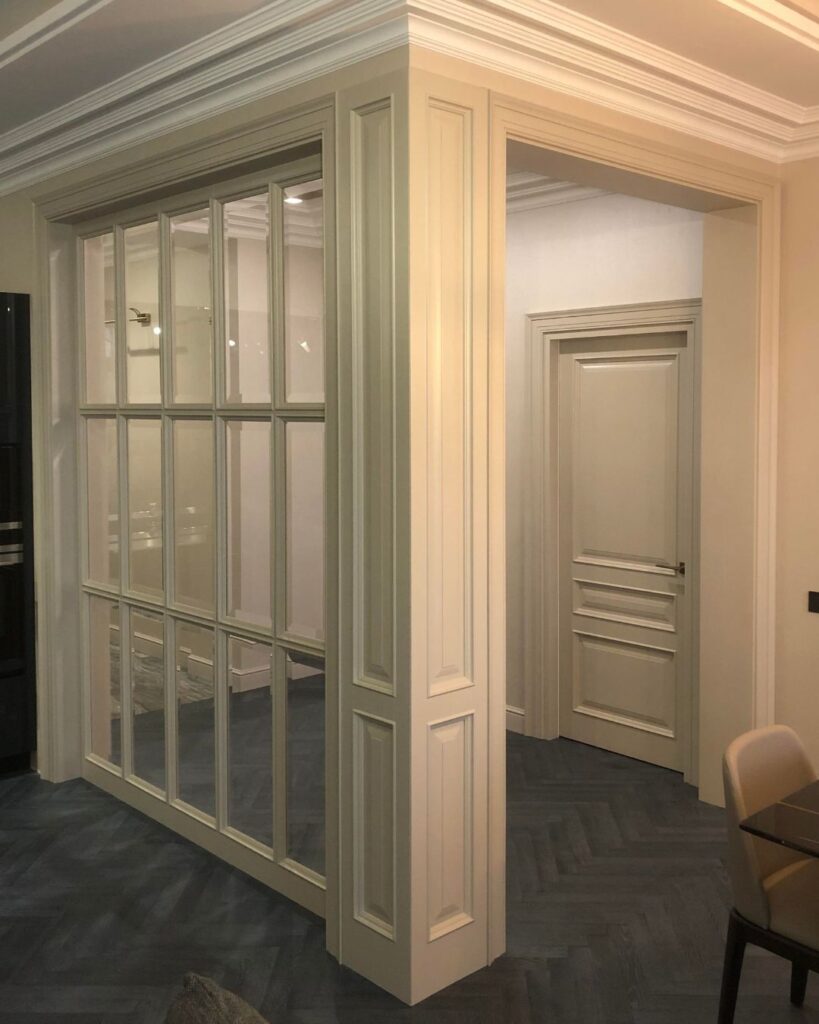
An interior is perceived as a coherent whole. Even the most beautiful doors can seem foreign to a kitchen or wardrobes if the wood tones, profiles, or decorative details differ.
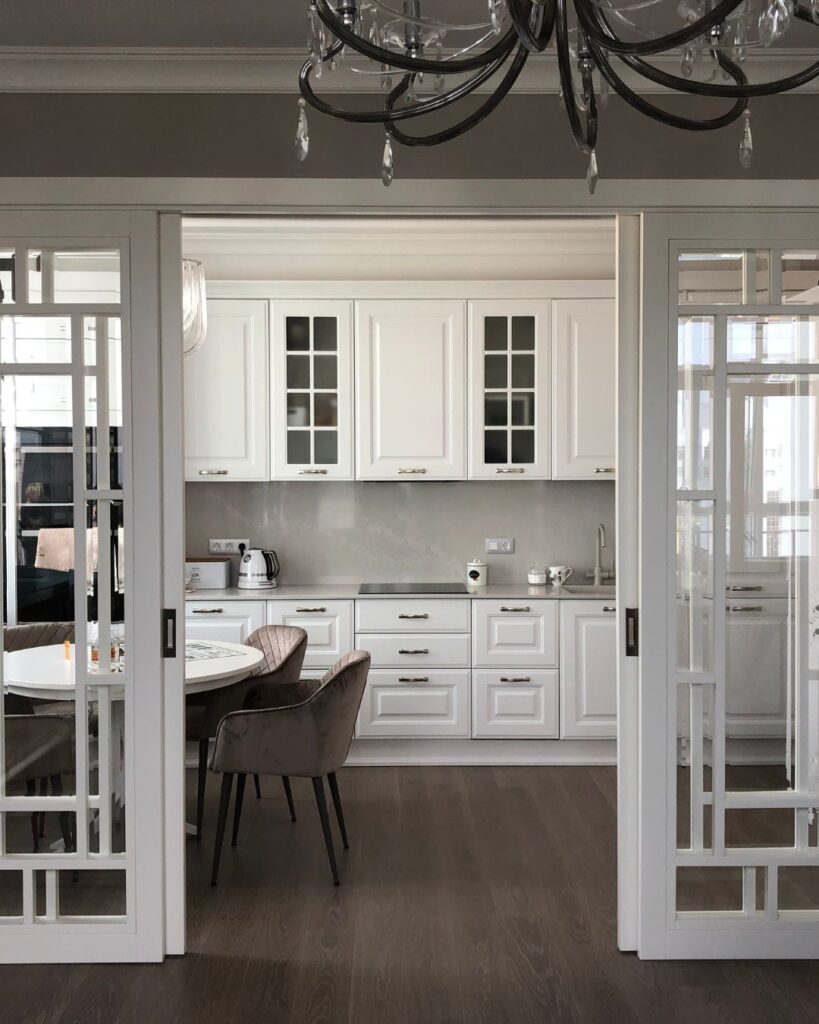
When doors, kitchen fronts, dressing rooms, bathroom furniture, skirting boards, and decorative elements are designed as part of the same project, it becomes possible to create a truly homogeneous interior.
For example:
- identical moulding profiles on doors and furniture fronts;
- coherent frames and decorative elements;
- harmonized hardware: handles, locks, and accessories that share the same aesthetic language;
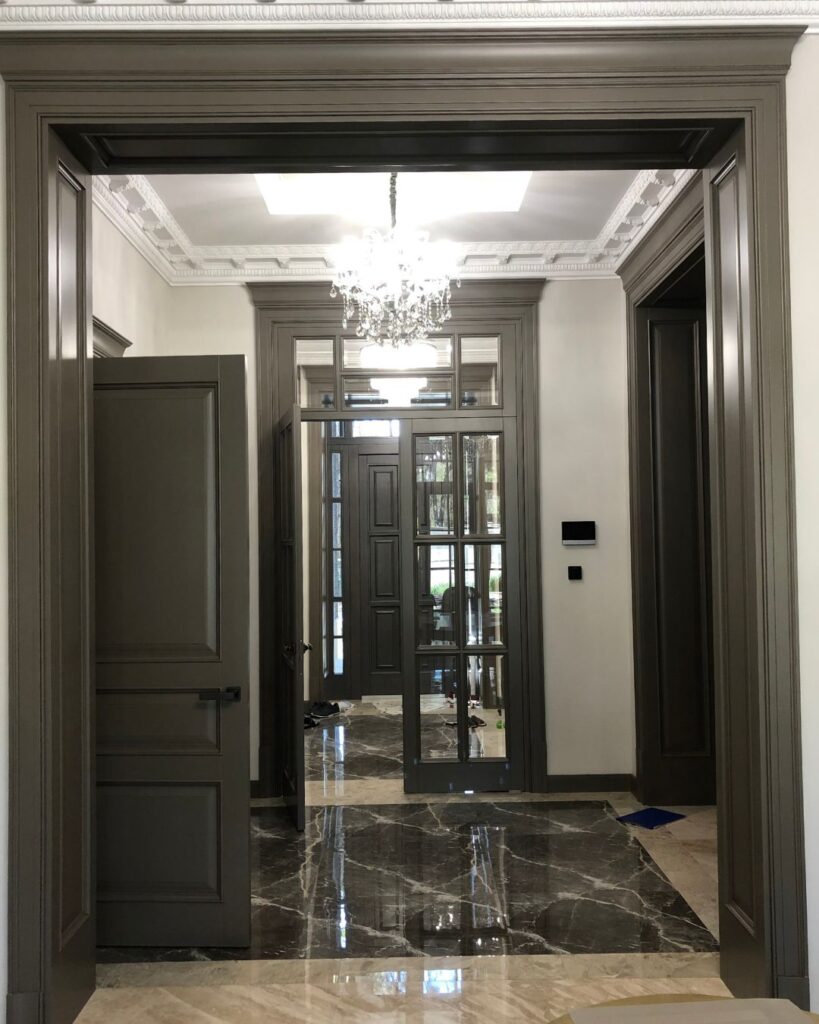
- skirting boards, casings, wall panels, and other joinery elements made in the same style;
- lines, proportions, and architectural details that naturally repeat in every room.
The result is an interior conceived as a global project, and not as a succession of purchases made over time.
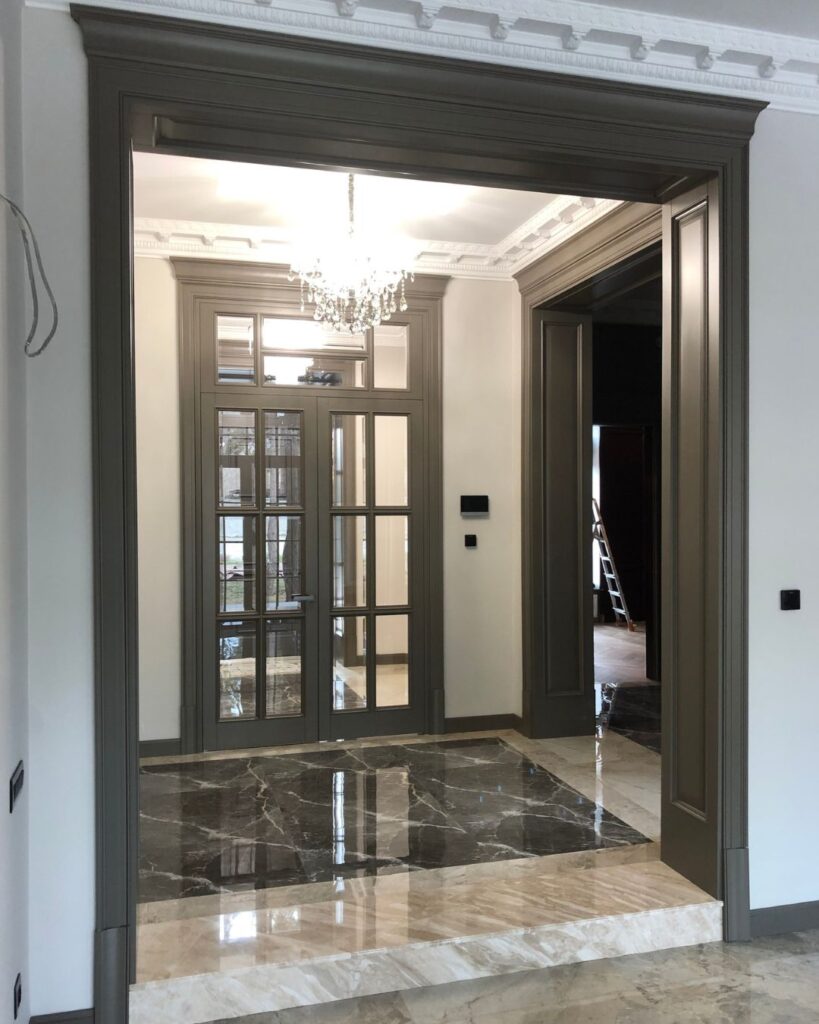
Perfect consistency of colors and finishes
This aspect is particularly important when working with solid wood.
Wood is a living material. Two oak elements made by different workshops and painted with different products will almost never have exactly the same appearance.
The differences may concern:
- the tone of the wood;
- the depth of the color;
- the level of gloss or matte finish;
- the highlighting of the grain.
When the entire project is manufactured simultaneously, the situation is completely different.
The different elements can be:
- made from the same batch of wood;
- painted in the same finishing booth;
- treated by the same finishing craftsman;
- finished with the same varnish or lacquer system.
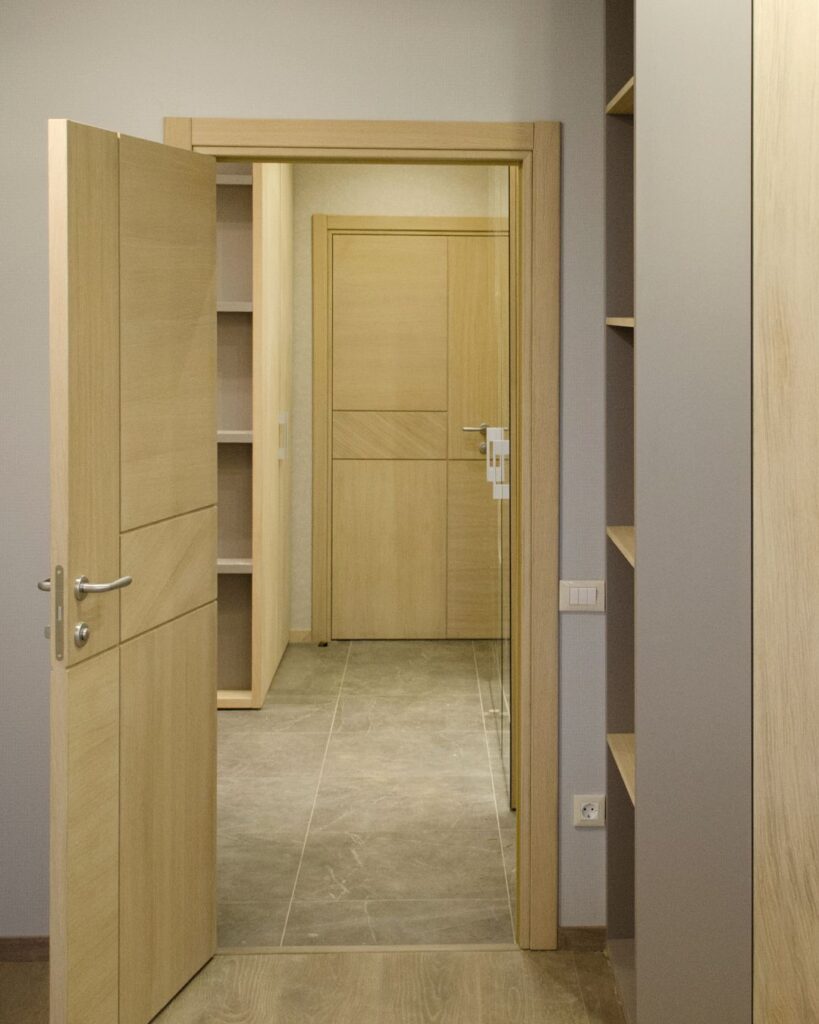
Doors, kitchens, wardrobes, furniture, and other elements then benefit from a truly uniform visual identity.
In high-end projects, it is precisely these details that make all the difference.
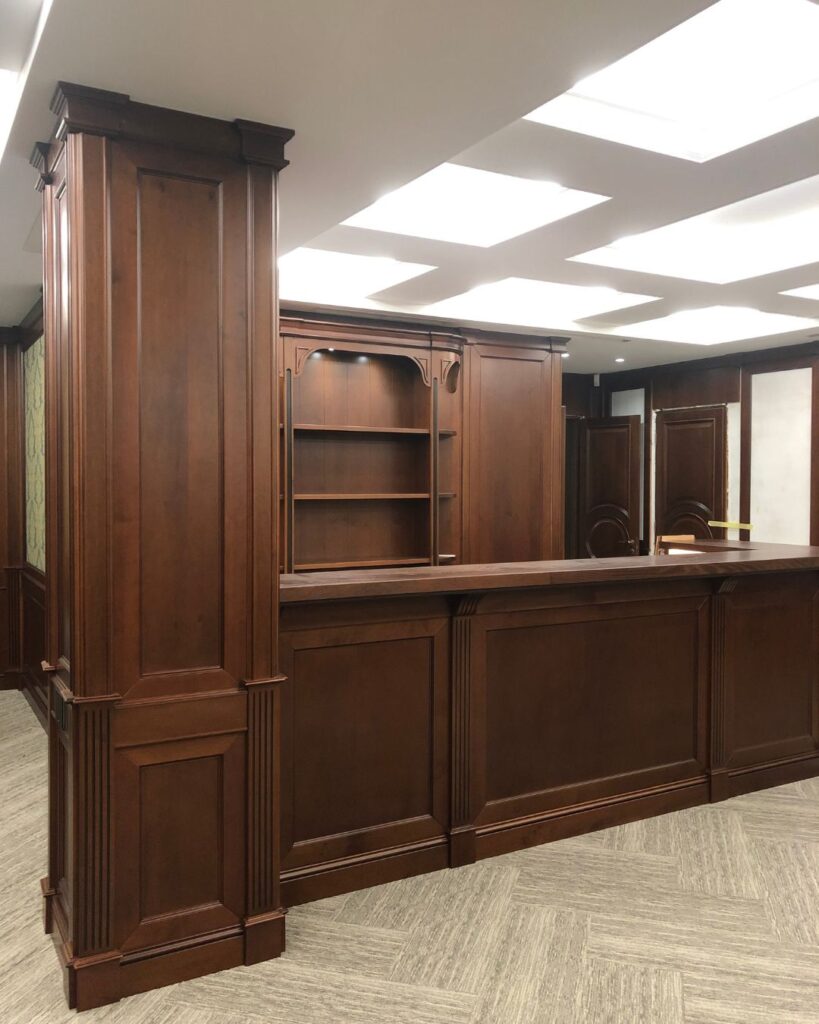
Perfect continuity of decorative details
When a single factory produces all the elements, it becomes possible to use exactly the same tools and manufacturing processes.
For example:
- the same cutters for mouldings on doors and furniture fronts;
- the same decorative profiles;
- the same radiuses and finishes;
- the same technical solutions in the different rooms of the house.
These details often go unnoticed at first glance, but they strongly contribute to the overall impression of quality and elegance.
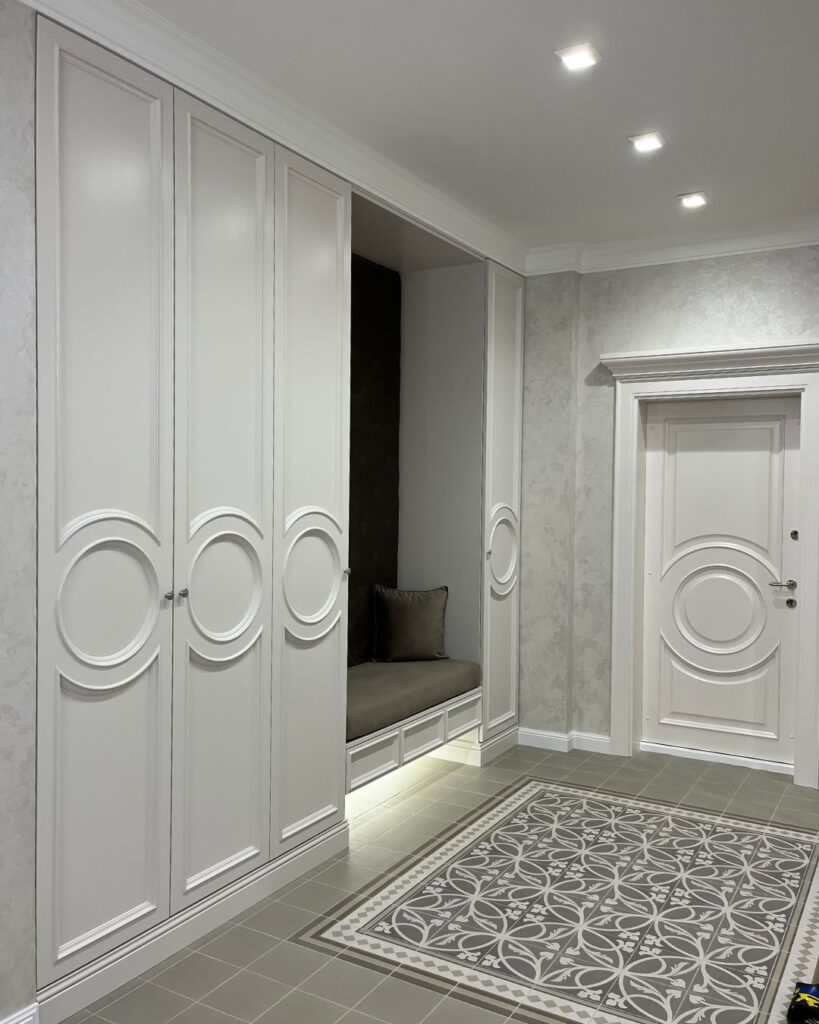
Consistent hardware throughout the house
Handles, knobs, locks, hinges, and accessories play a much more important role than one might imagine.
When doors and furniture are designed together, it becomes easier to:
- harmonize metallic materials and finishes;
- maintain the same style in all rooms;
- avoid unintentional mixing of different aesthetic universes.
This coherence greatly contributes to the feeling of a well-resolved interior.
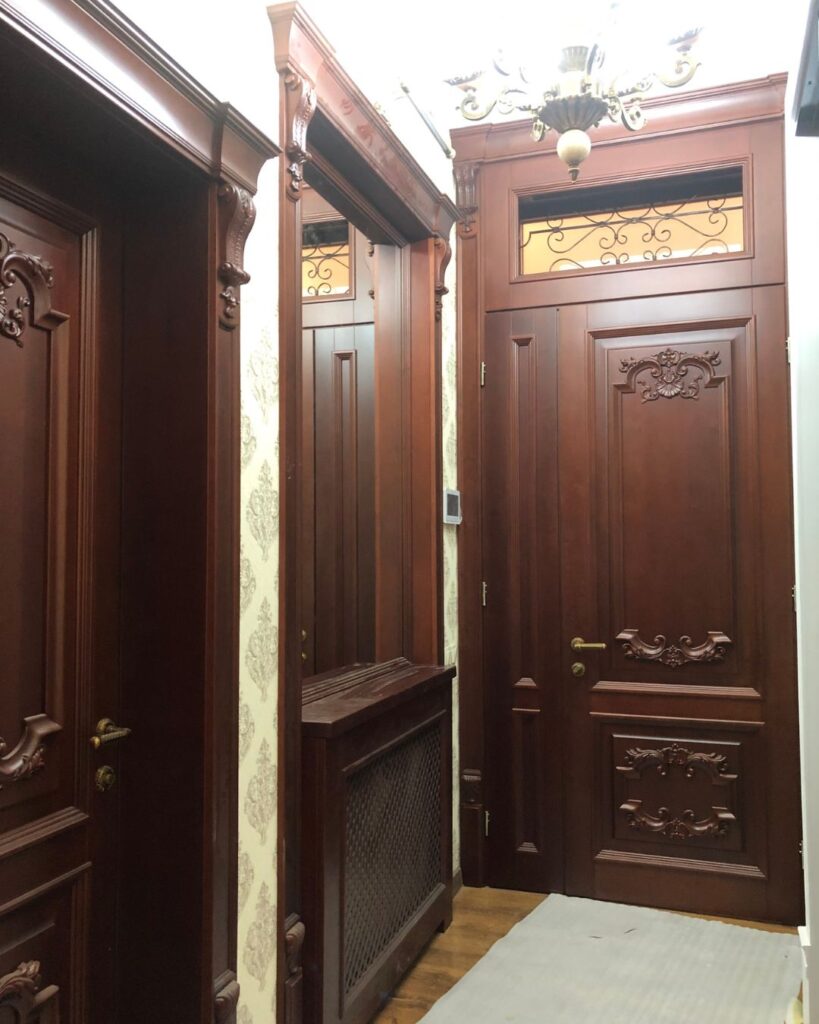
Continuity between skirting boards, casings, and joinery elements
Skirting boards, wall cladding, casings, and decorative panels are often the elements that visually connect all the rooms in a home.
When they are designed in the same project as the doors and furniture, they make it possible to:
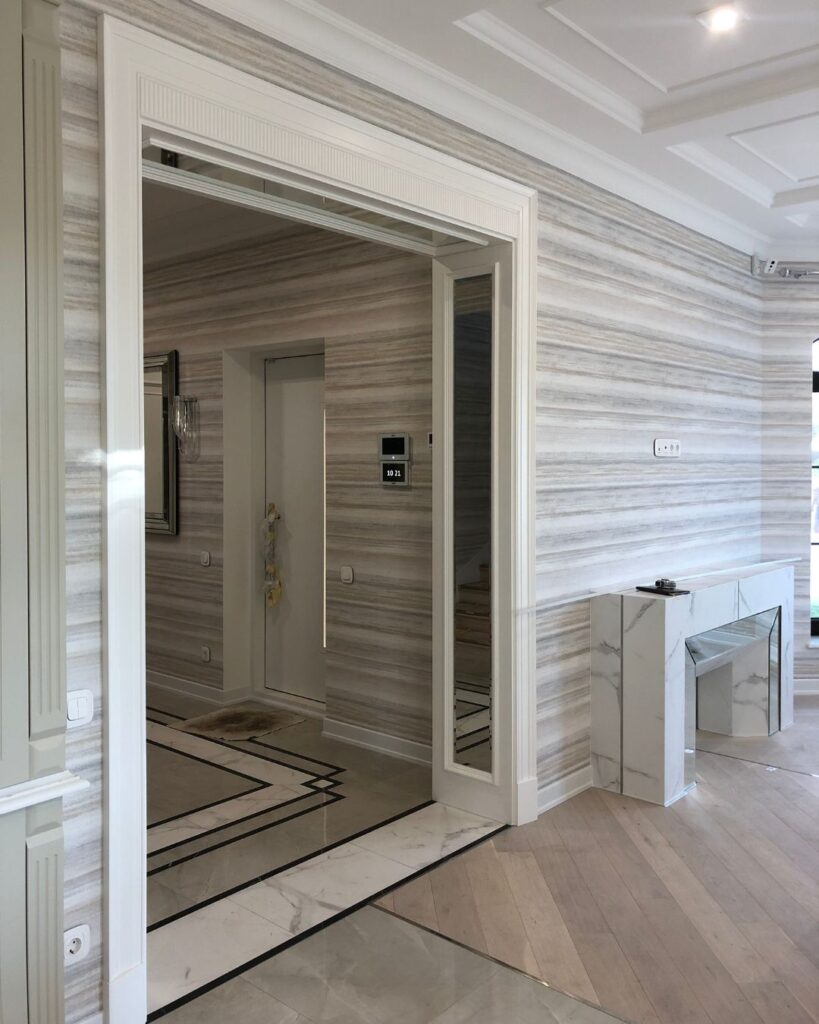
- ensure perfect visual continuity;
- obtain natural transitions between spaces;
- avoid differences in profiles, colors, or proportions.
It is often these details that distinguish a high-end interior from one that is simply well arranged.
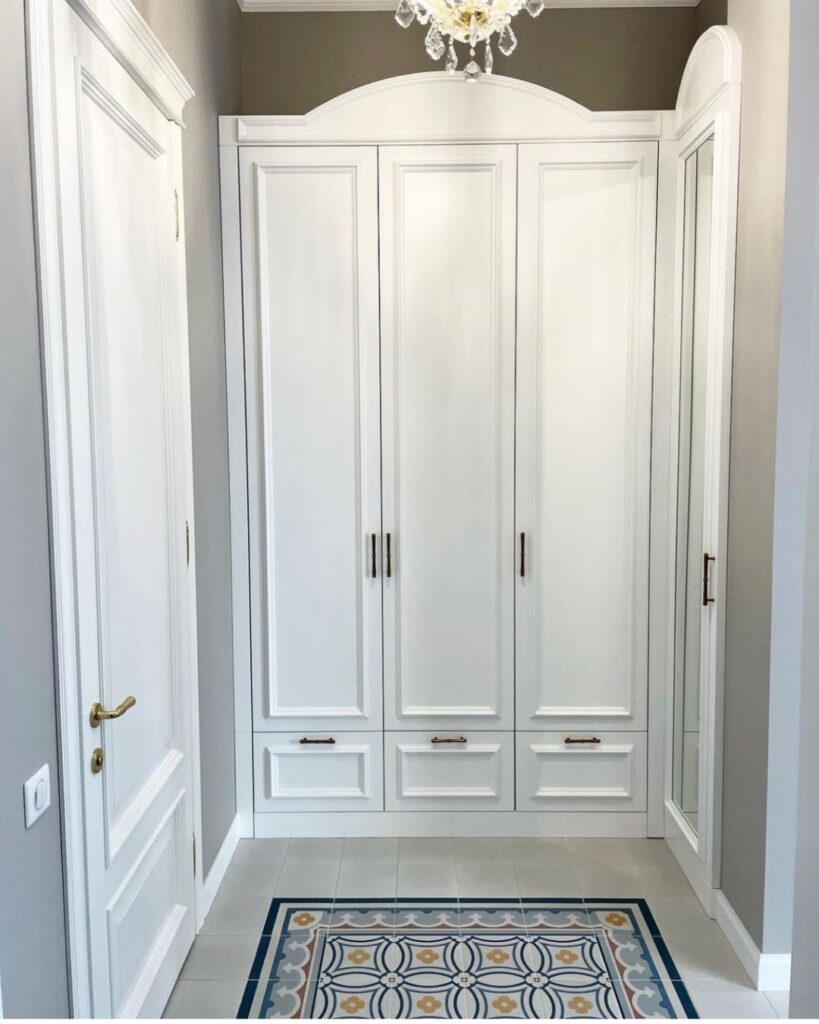
A single point of contact instead of several
A project rarely becomes simpler when it involves too many stakeholders.
One manufacturer for the doors, another for the kitchen, a third for the wardrobes, a fourth for the skirting boards: the site coordinator quickly faces communication and organizational difficulties.
This frequently leads to:
- dimensional incompatibilities;
- conflicts between furniture and wall cladding;
- errors in the positioning of sockets and switches;
- problems during installation;
- delays linked to dependence on several suppliers.
Centralizing the works makes it possible to considerably reduce these risks.
Better coordination with the project manager and designer
Many difficulties appear well before the start of manufacturing.
It is necessary to anticipate:
- wall thickness;
- opening dimensions;
- casing overlaps;
- skirting board heights;
- door opening directions;
- furniture placement;
- technical requirements and routing of services.
When the manufacturer is involved from the earliest phases of the project, a large part of the potential problems can be resolved even before the site begins.
Timelines that are easier to manage
With several manufacturers, timelines often become interdependent.
A delay on the kitchen can delay the installation of skirting boards. A modification to a dressing room can postpone the installation of doors.
When the different elements are manufactured as part of a single project, it becomes much simpler to organize the stages of production and installation.
The site then gains in fluidity and predictability.
A global project often more financially advantageous
Producing a complete set generally allows the manufacturer to optimize:
- material purchases;
- machine setup;
- finishing operations;
- logistics;
- installation work.
For this reason, global projects often benefit from more advantageous economic conditions than ordering separate elements at different times.
Better visibility on the budget, timelines, and final result
One of the main advantages of a global approach is the possibility of defining from the outset:
- the overall project budget;
- production timelines;
- the materials used;
- aesthetic choices;
- the final appearance of the interior.
This avoids unpleasant surprises during the project and allows decisions to be made more calmly.
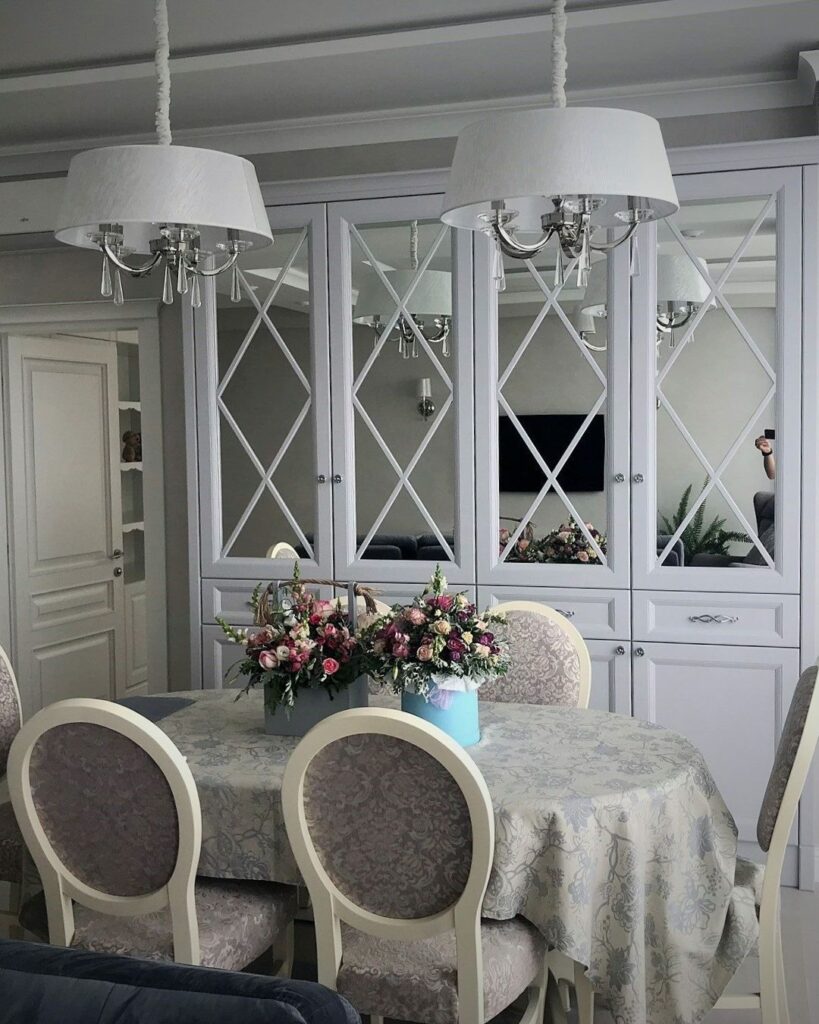
A project that can be realized rather than just a computer-generated image
Visualizations created by architects and designers can be magnificent, but they do not always take into account technical constraints, real costs, or manufacturing timelines.
Early involvement of the manufacturer makes it possible to quickly determine:
- what is technically feasible;
- the real cost of the proposed solutions;
- the necessary timelines;
- the materials best suited to the project.
The client thus obtains not only a beautiful idea, but above all an interior that can truly be realized as it was imagined.
Conclusion
When a renovation project includes custom joinery and furniture, it is often relevant to consider the entire interior as a single project rather than as a series of independent purchases.
Doors, kitchens, dressing rooms, bathroom furniture, skirting boards, wall panels, and decorative elements can then interact with each other to create a coherent, balanced, and durable space.
And perhaps the real question is not whether everything must absolutely be ordered from a single manufacturer, but rather to consider, from the design phase, doors, furniture, and joinery elements as different components of the same interior. It is very often this approach that makes it possible to obtain the most harmonious and long-lasting results.